2026-10-07 · Mark Crawford
Is Crawl Space Encapsulation Worth It for Tulsa Homes?
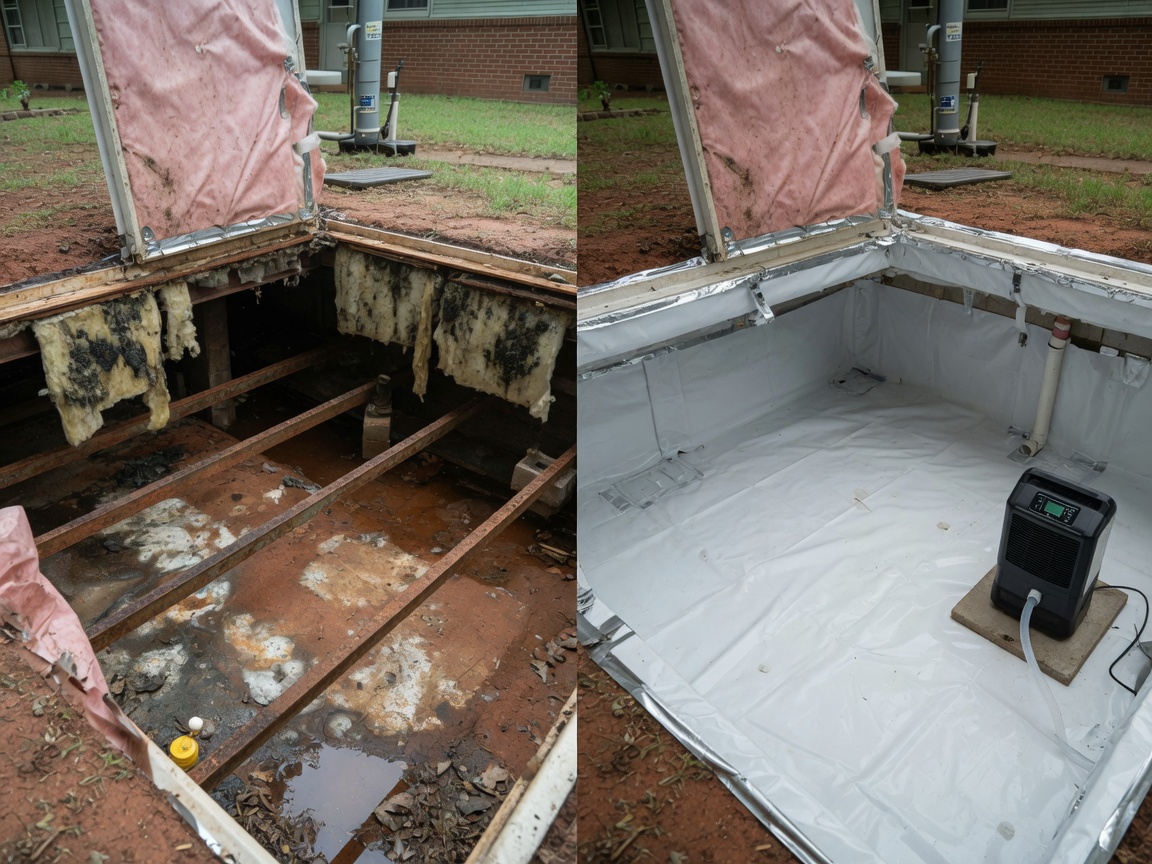
Crawl space encapsulation delivers measurable value for many Tulsa homes when moisture from warm humid summers and severe thunderstorms accelerates wood decay and mold growth. Homes built before 1980 in neighborhoods such as Maple Ridge, Brookside, and Cherry Street often see 15-25% lower humidity readings after a full 6-mil vapor barrier plus dehumidifier setup, which can slow floor joist deterioration by 8-12 years. Payback typically appears through reduced energy loss and avoided structural repairs rather than immediate cash savings.
How Tulsa Weather Shapes Crawl Space Conditions
Tulsa County experiences warm humid summers that push ground moisture upward and cold winters that create condensation cycles inside vented crawl spaces. Severe thunderstorms drop several inches of rain in hours, overwhelming older perimeter drainage around Greenwood and Pearl District properties. Homes in Jenks and Bixby sit on clay-heavy soils that hold water longer, increasing the chance of standing water under floor joists during spring storms. These conditions turn standard vented crawl spaces into environments where mold colonies form within weeks and untreated joists lose structural integrity faster than in drier regions.
Benefits Observed in Local Housing Stock
Encapsulation creates a sealed environment that limits vapor drive from the soil, which directly addresses the high water table common along the Arkansas River corridor near Downtown Tulsa and Utica Square. Homeowners in Owasso and Broken Arrow report steadier indoor temperatures because the sealed barrier reduces the stack effect pulling conditioned air into the crawl space. When paired with targeted waterproofing, encapsulation also lowers the frequency of musty odors that travel through HVAC returns in older Maple Ridge bungalows. The process typically includes sealing all vents, seams, and penetrations plus a dehumidifier sized for the square footage, producing consistent 45-55% relative humidity year-round.
Cost Factors Specific to Tulsa County
Material and labor costs for full encapsulation in a 1,200-square-foot Tulsa crawl space generally range from $4,500 to $7,800 depending on access difficulty and whether floor joist sistering is needed first. Properties in flood-prone pockets near Route 66 Historical Village may require additional French drain work that adds $1,800-$3,200. Annual dehumidifier electricity and filter changes run $180-$250, while the vapor barrier itself carries an expected 20-25 year lifespan before seams need inspection. These numbers shift upward for homes in Bixby or Glenpool where longer drive times and tighter access under pier-and-beam foundations increase labor hours.
When Encapsulation Makes Sense Versus Alternatives
Encapsulation proves worthwhile when relative humidity readings stay above 65% for more than three months or when visible mold appears on subfloor sheathing in areas like the Pearl District. It pairs well with crawl space waterproofing on lots that collect runoff from neighboring properties. Homeowners facing recurring musty smells should first review common local triggers outlined in Why Does My Crawl Space Smell? Common Causes in Tulsa Homes before committing to a full seal. In cases of active mold colonies, crawl space mold remediation often precedes encapsulation to prevent trapping spores behind the new liner. For sagging floors in Greenwood or Cain's Ballroom vicinity homes, addressing joist issues through sagging floor and floor joist repair before encapsulation prevents future movement once the space is sealed.
Tulsa Crawl Space Repair Pros operates from 7682 E 46th Pl, Tulsa, OK 74145 and remains available daily from 8am to 6pm to assess specific conditions in your crawl space.