2026-10-07 · Mark Crawford
Floor Joist Sistering: When Tulsa Homes Need It and What It Costs
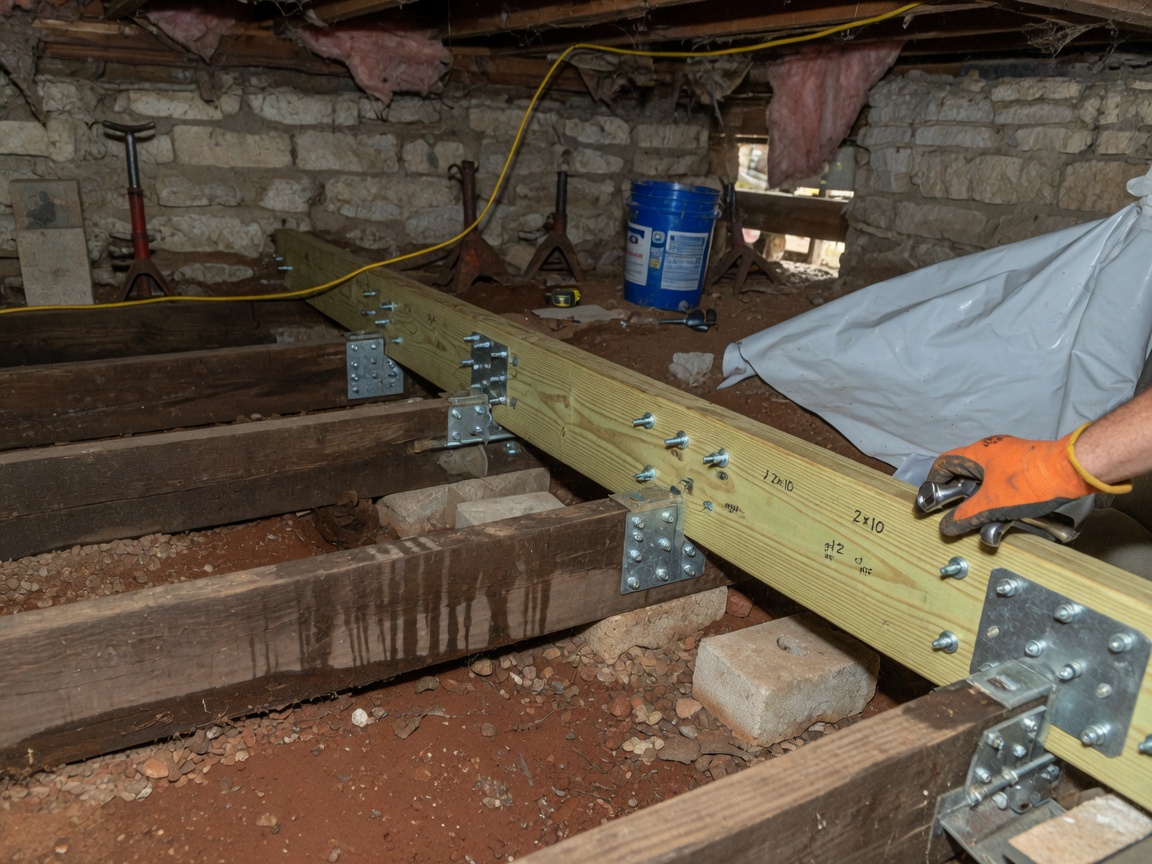
In Tulsa County homes built before 1970, floor joist sistering is required when moisture from warm humid summers and severe thunderstorms causes wood rot or insect damage that weakens joists under living areas. Typical project costs range from $2,800 to $5,500 for a standard three-bedroom house in neighborhoods such as Maple Ridge or Greenwood, depending on access and the number of joists involved.
Signs of Joist Damage in Tulsa Crawl Spaces
Homeowners in Cherry Street and Brookside often notice sagging floors or bouncy areas above crawl spaces after repeated thunderstorm seasons. Visible mold streaks on joists, soft spots when walking, or doors that stick can indicate that sistering is needed rather than simple reinforcement. In areas like Utica Square and the Pearl District, older pier-and-beam foundations sit close to grade where runoff collects during heavy rains, accelerating decay along the bottom edges of joists. Checking from the access door with a flashlight reveals these issues before they affect the subfloor above.
How Local Climate and Soil Conditions Drive the Need
Tulsa's warm humid summers keep crawl space humidity high while cold winters cause condensation on cooler joists, creating repeated wet-dry cycles that rot untreated pine. Frequent severe thunderstorms drop several inches of rain quickly, and clay-heavy soils in Bixby and Jenks hold water against foundation walls longer than sandy soils found farther east. Homes in Downtown Tulsa and Greenwood commonly have 18- to 24-inch crawl spaces that trap this moisture, leading to joist ends rotting where they rest on girders. Sistering adds a new joist alongside the damaged one to restore strength without full replacement.
The Sistering Process for Local Homes
Technicians begin by evaluating every joist from the 7682 E 46th Pl shop base before heading to the site, confirming which members have lost more than 30 percent of their cross-section. New pressure-treated lumber matching the original 2x8 or 2x10 size is cut to length, then bolted or lagged alongside the existing joist with construction adhesive between the faces. In Maple Ridge homes with limited headroom, shorter sister boards are installed in sections and staggered to maintain continuous support. All work occurs during daylight hours within the Mon–Sun 8am–6pm window so crews can complete the job before evening thunderstorms return.
Cost Factors Specific to Tulsa Projects
Labor accounts for the largest portion because crews must navigate tight crawls in older Pearl District homes and carry materials through narrow access doors common in Greenwood. Material costs rise when termite damage requires additional sister boards on multiple joists, pushing totals toward the higher end of $2,800–$5,500. Jobs in Owasso or Broken Arrow may cost slightly less due to newer construction with taller crawl spaces that improve access. Adding a vapor barrier during the same visit often reduces future moisture issues that would otherwise shorten the lifespan of newly sistered joists.
When Sistering Pairs with Other Crawl Space Work
After sistering, many Tulsa homeowners schedule crawl space encapsulation to control the humidity that originally caused the rot. Properties near the Gathering Place or Woodward Park that sit on low lots benefit from combining joist repair with waterproofing to divert stormwater away from the foundation. For readers noticing musty odors after storms, the article Why Does My Crawl Space Smell? Common Causes in Tulsa Homes explains how encapsulation and sistering work together to restore both structure and air quality.