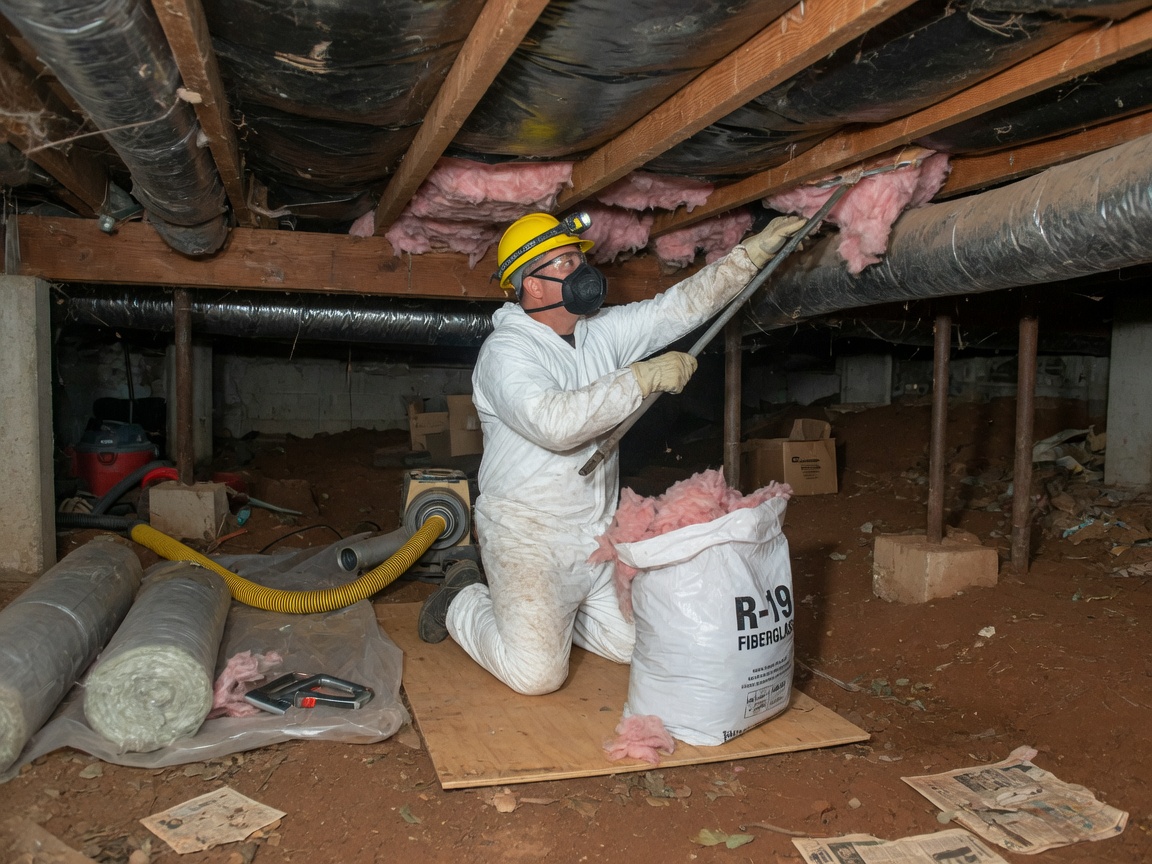
Tulsa's warm humid summers and frequent severe thunderstorms push moisture into crawl spaces under homes built in the 1940s through 1970s in neighborhoods like Maple Ridge and the Pearl District. Without proper insulation and vapor control, condensation forms on joists and leads to mold growth that travels into living spaces. Rigid foam or closed-cell spray foam installed on the rim joists and walls creates a thermal break that holds up better than fiberglass in these conditions.
In areas like Greenwood and Cherry Street, many homes sit on dirt or gravel floors with limited access. We often remove existing wet insulation first, then seal the ground with a 12-mil vapor barrier before adding insulation to the underside of the floor or walls. This sequence prevents the insulation from trapping moisture against the wood framing during the cold winter months when indoor heat drives vapor downward.
Homes in Jenks and Bixby near the Arkansas River floodplain see higher groundwater influence after heavy rains. Insulation work here requires attention to grading around the foundation and ensuring vents or sealed encapsulation systems do not create new moisture traps. We check for plumbing leaks and termite damage before installing any material because these issues are common in Tulsa County's older stock.
Code requirements in Tulsa County call for minimum R-19 in most crawl spaces when accessible. We match material R-value to the home's construction and access constraints rather than over-insulating, which can cause condensation on the cold side in winter. Every job ends with a visual check that the insulation is tight to the structure and the vapor barrier overlaps are sealed.
Technician insight
In Tulsa, the thing that catches most people out with crawl space insulation is skipping the vapor barrier on the dirt floor before adding wall or floor insulation. Older homes in Maple Ridge and Greenwood often have high summer humidity that condenses on the new insulation once winter heat starts pushing downward, turning a simple insulation job into a mold problem within a year.
Brookside Home With Sagging Insulation
The homeowner noticed higher heating bills and musty air after several thunderstorms. We found saturated fiberglass batts and standing water near the foundation in the Brookside crawl space. We removed the wet material, installed a sealed vapor barrier, then added rigid foam to the walls and rim joists. The space stayed dry through the next winter with no further moisture issues.
Crawl Space Insulation Services We Offer
✓Rigid Foam Board Insulation
Installs 2-inch or thicker polystyrene boards against crawl space walls and rim joists to stop heat loss and condensation common in Tulsa's cold winters.
✓Closed Cell Spray Foam Insulation
Applies closed-cell foam directly to joists and walls for air sealing plus insulation in one step, ideal for irregular spaces under older Tulsa homes.
✓Vapor Barrier with Insulation
Combines a sealed 12-mil ground cover with wall or floor insulation to manage humidity from Tulsa's frequent thunderstorms before it reaches the living area.
✓Batt Insulation Installation
Fits fiberglass or mineral wool batts between floor joists in drier crawl spaces, secured with wire supports to prevent sagging in humid conditions.
✓Insulation Removal and Replacement
Removes wet or compressed existing insulation, treats minor mold, then installs new material suited to the home's location in areas like Brookside or Owasso.
✓Rim Joist Insulation
Targets the perimeter rim joist with foam board or spray foam to reduce the biggest source of heat loss in Tulsa County crawl spaces during winter.
Crawl Space Insulation Cost in Oklahoma
| Service | Typical Range | What Affects It |
|---|---|---|
| Rigid foam board per square foot | $2.50–$4.00 | Higher in low-clearance spaces common in Maple Ridge homes |
| Closed-cell spray foam per board foot | $1.50–$2.25 | Includes vapor barrier tie-in |
| Full crawl space insulation package | $1,800–$4,200 | Typical 800–1,200 sq ft Tulsa County home with dirt floor |
| Insulation removal only | $600–$1,200 | Wet or rodent-damaged material in older Greenwood or Pearl District homes |
Ranges are typical for Oklahoma and confirmed with an exact written quote before any work starts.
How it works
- 1
Site Assessment
We enter the crawl space from the address in Tulsa County, check moisture levels, existing insulation condition, and note access points or low clearance areas.
- 2
Moisture Control Prep
Install or repair the vapor barrier on the dirt floor and seal all seams and penetrations before any insulation goes in.
- 3
Material Placement
Cut and fit rigid foam, spray foam, or batts to walls, rim joists, or floor system based on the home's construction and local humidity patterns.
- 4
Final Sealing And Check
Tape all joints, confirm R-value coverage, and verify no gaps remain that would allow air movement from the crawl space into the house.
Pricing
Pricing varies by square footage, access difficulty, and whether existing insulation must be removed first.