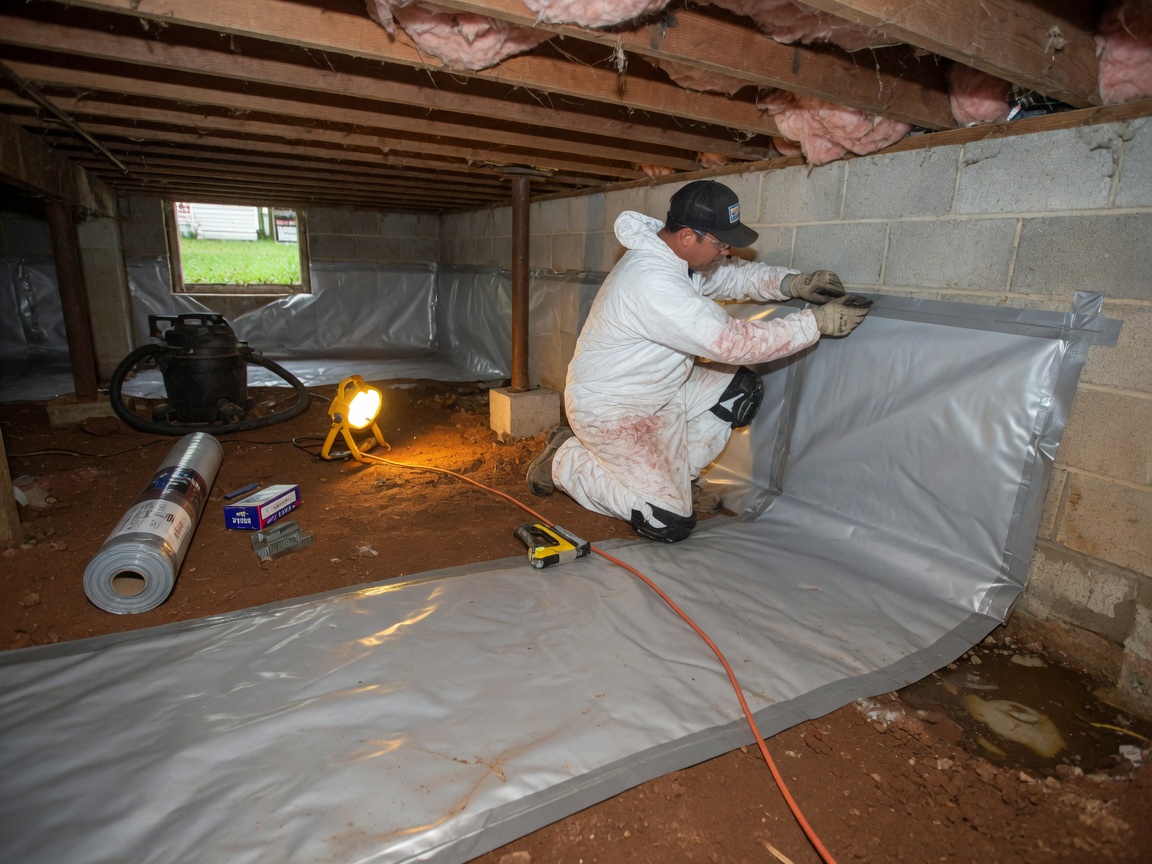
Tulsa homes built before 1970 in neighborhoods like Maple Ridge and Greenwood often sit on dirt or gravel crawl spaces with minimal original ventilation. Warm humid summers combined with frequent severe thunderstorms push moisture upward through the soil, leading to mold on floor joists and musty air in living spaces above. A 6-mil or thicker reinforced polyethylene vapor barrier sealed at all seams and perimeter walls stops this vapor drive before it reaches the subfloor.
Edge cases appear regularly in Cherry Street and Brookside where additions or utility lines were installed without proper sealing. Gaps around plumbing, HVAC ducts, and electrical penetrations allow humid air to bypass the barrier. We cut custom boots and mastic-seal every penetration, then mechanically fasten the liner to the foundation stem wall so it stays in place during winter freeze-thaw cycles that can heave soil in Tulsa County.
Tulsa building practices in older stock rarely included code-level moisture control. Modern vapor barrier work must account for the clay-heavy soils common from Jenks to Owasso that hold water after storms. We slope the liner slightly toward a low point and coordinate with any existing sump or French drain so water moves away instead of pooling under the plastic.
Homeowners in Bixby and Broken Arrow sometimes attempt DIY rolls from big-box stores that tear during installation or fail to overlap properly. Professional-grade material with reinforced scrim and compatible seam tape holds up under foot traffic during future service visits and resists punctures from sharp gravel common in local crawl spaces.
Technician insight
In Tulsa the thing that catches most people out with Crawl Space Vapor Barrier Installation is the clay soil around Downtown Tulsa and Utica Square that holds water after thunderstorms. Homeowners lay cheap plastic that slides or tears when the ground shifts during winter freezes, then moisture reappears under the floor. We always fasten the liner mechanically and slope it because flat installs fail here within two seasons.
Brookside Addition Moisture Issue
A 1960s home in Brookside showed persistent musty odors after summer storms. We found the original thin plastic had pulled away from the stem wall near a new HVAC line. After installing a reinforced barrier with sealed perimeter and custom boots around the duct, the floor joists dried and the odor disappeared within weeks.
Crawl Space Vapor Barrier Installation Services We Offer
✓Reinforced Vapor Barrier Installation
Heavy-duty 12-mil reinforced liner installed over dirt or gravel floors in Tulsa crawl spaces to resist punctures from local soil and foot traffic.
✓Perimeter Wall Sealing
Mechanical attachment of vapor barrier to foundation stem walls in older Tulsa County homes to prevent humid air from entering at the edges.
✓Utility Penetration Sealing
Custom boots and mastic sealing around plumbing, ducts, and wiring common in Maple Ridge and Greenwood crawl spaces.
✓Crawl Space Encapsulation Tulsa
Full vapor barrier system that ties into wall and rim joist sealing for homes in humid summer conditions across Jenks and Bixby.
✓Vapor Barrier Over Sump Areas
Properly sloped and sealed liner around existing sumps in storm-prone Tulsa neighborhoods so water drains without lifting the barrier.
Crawl Space Vapor Barrier Installation Cost in Oklahoma
| Service | Typical Range | What Affects It |
|---|---|---|
| Standard vapor barrier install | $1,800–$3,200 | Homes under 1,200 sq ft with good access in areas like Owasso or Bixby |
| Perimeter wall attachment | $400–$750 | Added when stem walls are uneven or crumbling in older Maple Ridge homes |
| Utility boot sealing | $150–$350 | Per five penetrations common in Greenwood and Cherry Street additions |
| Full encapsulation tie-in | $2,800–$4,500 | Includes wall and rim joist sealing in humid-summer neighborhoods |
Ranges are typical for Oklahoma and confirmed with an exact written quote before any work starts.
How it works
- 1
Site Assessment
Inspect soil type, existing moisture, and access points in the Tulsa crawl space while noting utility locations and any low spots.
- 2
Surface Preparation
Remove sharp debris and level high spots so the liner lies flat without punctures from local gravel or clay.
- 3
Liner Installation
Roll out reinforced material, overlap seams by 12 inches minimum, and seal with compatible tape rated for humid conditions.
- 4
Perimeter and Penetration Sealing
Fasten liner to foundation walls and seal every pipe, duct, and wire entry point found in Tulsa homes.
- 5
Final Inspection
Check for gaps, confirm slope toward drainage, and verify the barrier stays secure under typical foot traffic.
Pricing
Pricing depends on crawl space size, access difficulty, and number of utility penetrations typical in older Tulsa homes.