2026-10-07 · Mark Crawford
Crawl Space Vents in Oklahoma: Should They Be Open or Closed?
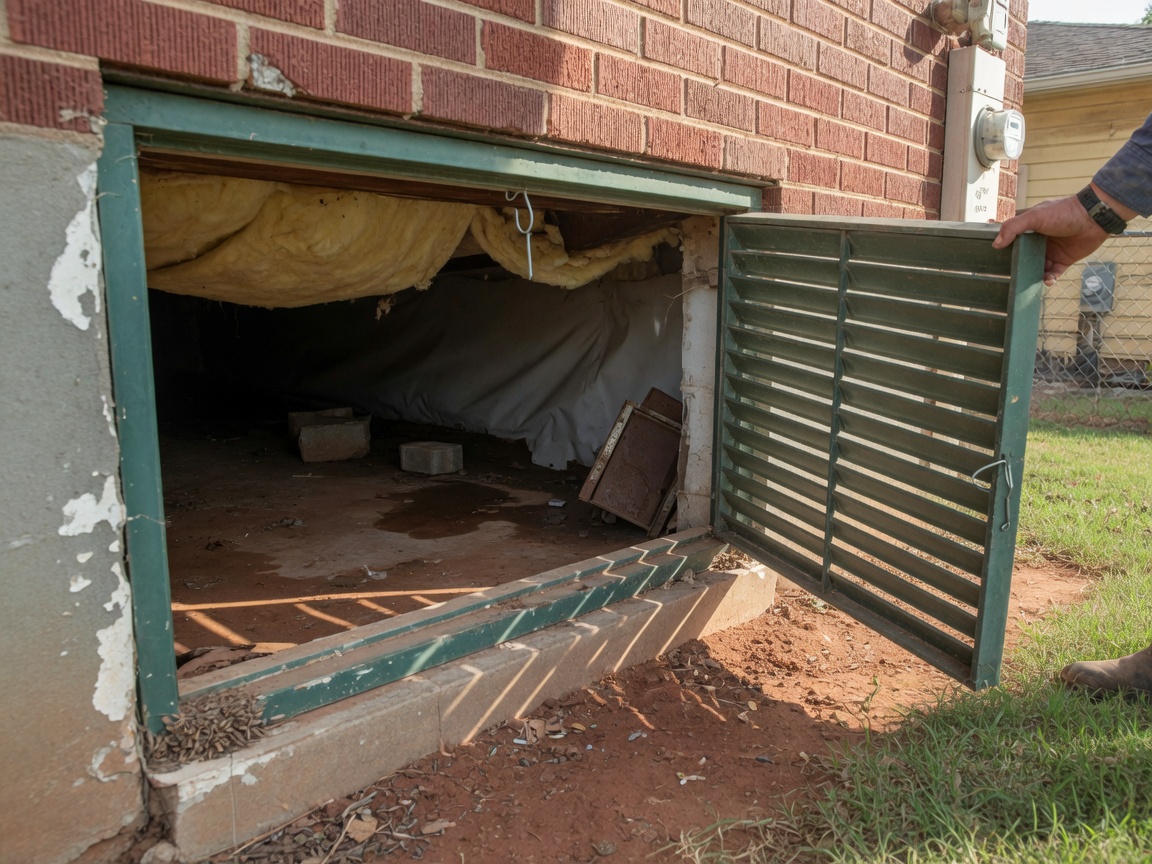
In Tulsa County homes, crawl space vents should be closed year-round. Warm humid summers push moist air through open vents while cold winters and severe thunderstorms add condensation and standing water that rot floor joists in older stock found in Maple Ridge, Pearl District, and Greenwood.
How Tulsa Weather Affects Vent Decisions
Tulsa experiences warm humid summers that keep outdoor air above 70 percent relative humidity for weeks at a time. When that air enters a crawl space through open vents it meets cooler ground temperatures and condenses on joists and insulation. Cold winter nights then pull that trapped moisture into cycles of freezing and thawing that crack sill plates. Frequent severe thunderstorms drop several inches of rain in hours, raising the local water table and pushing groundwater under foundations in Brookside and Cherry Street. Homes built before 1970 in these neighborhoods often sit on clay soils that hold water against the foundation for days, so open vents simply become intake points for that humidity.
Risks of Leaving Vents Open in Oklahoma Summers
Open vents allow humid air to flow freely into the crawl space during the long humid season from May through September. In areas such as Utica Square and the Pearl District, where many 1940s and 1950s homes still have original vents, this constant exchange raises wood moisture content above 20 percent. Elevated moisture feeds mold growth on subfloor plywood and encourages termite activity along the perimeter. After a typical July thunderstorm, open vents keep the space ventilated with 85-degree air that holds far more water vapor than the cooler crawl space can handle, leading to visible condensation on ductwork within 24 hours.
Benefits of Closing Vents and Adding a Vapor Barrier
Closing the vents stops the daily exchange of humid outside air. A sealed crawl space then stays closer to the conditioned temperature of the home above, cutting relative humidity by 30 to 40 points in summer. In neighborhoods like Jenks and Bixby, where newer construction still sits on high water tables, homeowners who close vents and install a sealed vapor barrier report drier floor joists within one season. The same approach works in older Downtown Tulsa properties where original vents were never designed for modern humidity loads. Crawl Space Encapsulation and Crawl Space Waterproofing both start with vent closure to keep exterior moisture from re-entering the space.
When Partial Venting Might Still Make Sense
A few properties on well-drained lots near Woodward Park or the Tulsa Air and Space Museum can use a hybrid approach during the driest winter months if a dehumidifier runs continuously. Even then, vents remain closed from March through November because thunderstorm frequency overrides any short-term drying benefit. In every case the decision starts with a moisture meter reading on the joists rather than calendar rules.
Practical Next Steps for Tulsa Homeowners
Check vent locations on the north and south sides of the foundation first, then test wood moisture content at multiple points. If readings stay above 16 percent after a storm, plan to close all vents permanently and add mechanical drying. Homes in Owasso and Broken Arrow that already show sagging floors often need Sagging Floor and Floor Joist Repair once moisture is controlled. For readers dealing with repeated storm flooding, the article Standing Water in Your Crawl Space After Oklahoma Storms: What to Do Next outlines immediate drainage steps that pair with vent closure.